Information Library

Start Reading

When people hear the term oral surgery, many immediately think of wisdom teeth removal.But while that is one of the most common oral surgery procedures, oral surgeons treat a wide range of conditions involving the mouth, jaw, teeth, and face. Dr. Puhan He, assistant professor in the Department of Oral and Maxillofacial Surgery at the University of Pennsylvania, shares what oral surgeons do, when patients might need one, and how modern oral surgery has become more comfortable than ever.
Being told you may need oral surgery can raise a lot of questions, starting with who will perform it.
 “An oral surgeon is somebody who went to dental school training but also has received hospital training so that we can manage more complex cases,” says Dr. He. Oral and maxillofacial surgeons first earn a Doctor of Dental Surgery (DDS) or Doctor of Dental Medicine (DMD) degree and pass the required licensure exams. Then, they complete an additional four- to six-year surgical residency accredited by the Commission on Dental Accreditation, where they receive advanced training in anesthesia, oral pathology, and surgical procedures of the mouth, jaw, and face.
What does an oral surgeon do? Oral surgeons perform procedures involving the teeth, jaw, mouth, and facial structures. They may also treat patients with medical conditions that require specialized care, such as infections and injuries.
Many patients are referred to an oral surgeon by their dentist or another healthcare provider. Some of the most common procedures include:
“These are kind of our bread and butter,” Dr. He explains. However, the full scope of oral surgery extends beyond what many patients expect. Because oral surgeons receive hospital training, they may also treat more complex conditions.
 For example, oral surgeons often work closely with orthodontists and other specialists to treat facial deformities or jaw alignment issues. They may also provide surgical treatment for conditions like obstructive sleep apnea.
In hospital settings, oral surgeons frequently work with medical teams to treat serious infections, facial injuries, and head and neck trauma.
Another important part of their role involves evaluating abnormal growths or lesions in the mouth. If needed, oral surgeons may perform biopsies to determine whether a lesion is benign or malignant and recommend the appropriate next steps.
The word “surgery” can understandably make many patients feel anxious. Fortunately, modern advances have made oral surgery procedures safer, more precise, and more comfortable than in the past.
According to Dr. He, one major improvement is the increased availability of sedation options.
“We have adjuncts that help us make the patient feel better and more relaxed during the procedure,” he says.
These options include nitrous oxide (laughing gas) and IV sedation, both of which can help reduce anxiety during surgery. Because oral surgeons receive anesthesia training, they can safely provide these sedation methods when appropriate.
Technology has also improved surgical planning. Today’s digital imaging and planning software allows surgeons to map out procedures in advance. This can make surgeries less invasive, reduce procedure time, and help patients recover more comfortably.
Another important shift in oral surgery is a stronger focus on patient-centered care and interdisciplinary collaboration. “We work with our colleagues in interdisciplinary teams a lot more compared to before,” Dr. He says. This team-based approach helps ensure patients receive comprehensive and coordinated care.
Two of the most common oral surgery procedures are wisdom teeth removal and dental implant placement. Here’s what you can expect from these procedures.
Wisdom Teeth Removal:
Wisdom teeth, also known as third molars, are often removed when they become impacted or do not have enough room to grow properly.
Patients may choose different comfort options during the procedure, including nitrous oxide or IV sedation. For teeth that are fully buried in the jawbone, IV sedation is often recommended to help patients remain comfortable.
Dental Implants:
Dental implants are a long-term solution for replacing missing teeth. During the procedure, a small titanium post is placed in the jawbone to function as an artificial tooth root.
Many patients are surprised to learn that implant placement can be relatively straightforward. “Most people feel that the procedure itself is easier than getting an extraction,” Dr. He says.
 If you think you may need oral surgery or have been told you may need oral surgery, scheduling a consultation can help clarify your options. “Just meeting and chatting with your oral surgeon can help calm any nerves that you may have,” says Dr. He.
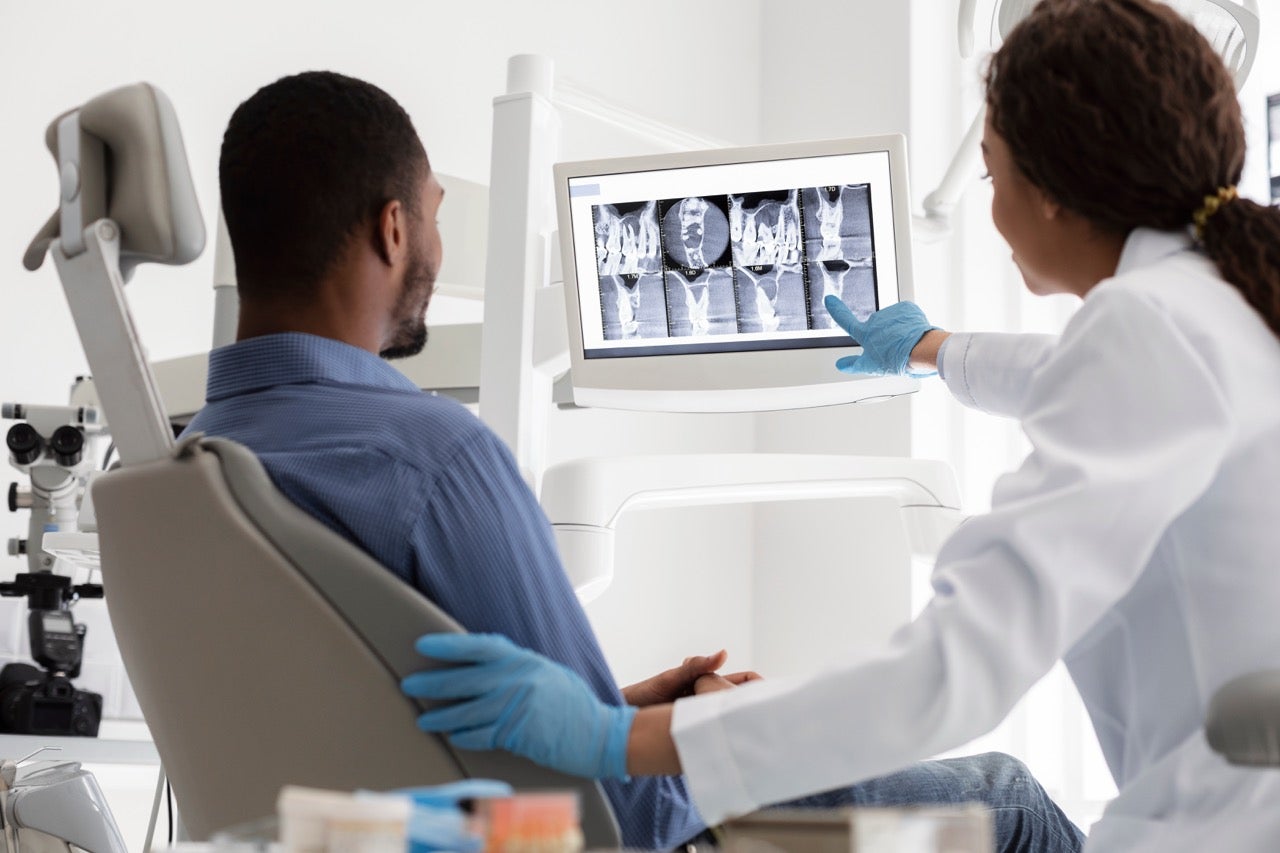
During a consultation, the surgeon can review your symptoms, examine imaging, and recommend the most appropriate treatment plan. Because oral surgeons are trained in both dental and medical care, they are well-positioned to guide patients toward the right next step.
In some cases, they may recommend seeing another dental specialist or addressing a medical concern before surgery.
If you’ve been told you may need oral surgery, or you’re experiencing symptoms that concern you, speaking with a specialist can help you better understand your options. The oral surgery team at Penn Dental Medicine is here to answer any questions you have. We can evaluate your condition and recommend a personalized treatment plan.
To schedule a consultation to learn more about oral surgery and the treatments that may help restore your oral health, call 215-898-8965 or complete this online form.