Information Library

Start Reading

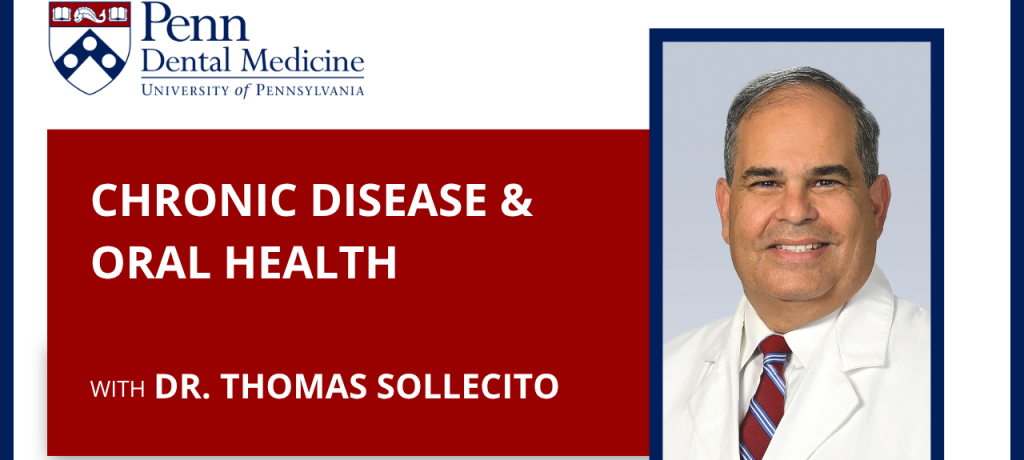
Your smile may reveal more about your health than you realize. Studies continue to link poor oral health to a variety of chronic conditions, including diabetes and cardiovascular disease, highlighting the important connection between oral health and overall health. To help patients better understand this connection, we spoke with Dr. Thomas Sollecito, Chief of Oral Medicine at Penn Dental Medicine, about how oral health affects the body, the warning signs of gum disease and oral cancer, and how you can protect your long-term health.
Many patients are surprised to learn how closely oral health and overall health are connected. To help explain the relationship between the mouth and the rest of the body, Dr. Sollecito shares answers to some of the most common questions he hears about oral health, chronic disease, and oral cancer.
 The mouth is often viewed as separate from the rest of the body, but that’s not how the body works. Dr. Sollecito explains that inflammation and infection in the mouth can influence overall health because the body’s systems are interconnected. Conditions such as gum disease create inflammation that may contribute to health concerns elsewhere in the body.
One of the most well-established examples is the relationship between diabetes and periodontal disease. According to Dr. Sollecito, inflammation is a key part of that relationship. Periodontal disease can increase inflammation in the body, making it more difficult for people with diabetes to manage their blood sugar levels. At the same time, poorly controlled diabetes can increase the risk of oral health problems and make it more difficult for the body to heal. Researchers have also explored connections between oral health and heart disease, with inflammation believed to play an important role.
“It’s a two-way street,” explains Dr. Sollecito. “Poor oral health can affect systemic health, and systemic health can affect oral health.”
While oral health alone may not cause chronic disease, maintaining a healthy mouth can be an important part of supporting overall wellness and managing existing health conditions.
 One of the challenges with gum disease, also known as periodontal disease, is that it can develop gradually and without significant discomfort. As a result, patients may not realize there is a problem until the condition has progressed.
According to Dr. Sollecito, common warning signs of gum disease include:
The good news is that gum disease is often reversible in its earliest stage, known as gingivitis. However, once it progresses to a more advanced periodontal disease, treatment becomes more complex, and the damage may be more difficult to reverse. “If you have gingivitis, it’s reversible. If you get into periodontitis, it becomes more difficult,” says Dr. Sollecito.
That’s why routine dental exams and professional cleanings are so important. Early detection allows dental professionals to identify signs of inflammation before they become more serious, helping patients protect both their oral health and overall health.
Dr. Sollecito notes that many people seek treatment because of bleeding gums, but healthy gums generally should not bleed during normal brushing or flossing. Paying attention to these early warning signs can help prevent more significant problems down the road.
Unlike many other health conditions, oral cancer often develops without causing significant pain in its earliest stages. That’s one reason routine dental visits are so important; dental professionals are trained to identify abnormalities that patients may not notice on their own.
“Any ulcer, sore, or lesion that doesn’t heal within two weeks should be brought to the attention of the dentist so that an appropriate diagnosis can be made,” says Dr. Sollecito. Other warning signs may include persistent mouth pain, difficulty swallowing, unexplained lumps, red or white patches inside the mouth, or changes in the way the tongue or mouth feels.
While tobacco use and heavy alcohol consumption remain significant risk factors for oral cancer, Dr. Sollecito notes that HPV-related oral cancers have become increasingly common in recent years, as well. This means that oral cancer can affect individuals who may not fit the traditional risk profile.
The encouraging news is that early detection can significantly improve treatment outcomes. Regular dental examinations provide an opportunity to identify potential concerns early, often before symptoms become severe. If you notice a persistent change in your mouth that doesn’t seem normal, it’s important to have it evaluated promptly.
For individuals living with chronic health conditions, maintaining good oral health is more than a dental concern. It’s an important part of overall health management. Conditions such as diabetes, autoimmune disorders, and certain cancer treatments can affect the mouth, increasing the risk of infection, inflammation, dry mouth, and other oral health complications.
Dr. Sollecito emphasizes that patients managing chronic diseases should be especially proactive about their oral care. Because oral health and overall health are closely connected, untreated dental issues may make it more difficult to manage other health concerns.
Fortunately, protecting your oral health doesn’t have to be complicated. Dr. Sollecito recommends several simple but effective habits:
These everyday practices can help reduce inflammation, prevent infection, and support both oral and overall health. For patients with chronic conditions, partnering with both medical and dental providers can help ensure a more comprehensive approach to long-term wellness.
 “Don’t neglect your mouth,” Dr. Sollecito stresses. “Understand that it has a profound effect, not only for tooth loss or gum disease, but also has a profound effect on the rest of your body.” At the end of the day, oral health is an important part of overall health. While brushing, flossing, and regular dental visits may seem like simple habits, they play a meaningful role in preventing disease, identifying problems early, and supporting long-term wellness.
Dr. Sollecito encourages patients to view oral health as an essential part of their healthcare routine rather than a separate concern. Whether you’re managing a chronic condition, monitoring your risk for oral cancer, or simply trying to maintain a healthy smile, consistent preventive care can make a significant difference.
“The body reacts as a sole entity,” says Dr. Sollecito. “It’s important to take care of your oral health because it can impact your overall health.”
The connection between oral and overall health is clear. Regular dental exams do more than help prevent cavities. They can identify early signs of gum disease, oral cancer, and other concerns before they become more serious. Combined with good daily habits and routine preventive care, they are an important part of protecting your long-term health.
Watch Dr. Sollecito’s full video to learn why your smile may reveal more about your health than you realize—and how the health of your mouth can affect the rest of your body. Then, if you have questions about your oral health or are due for a dental visit, our dental experts are here to help. With comprehensive care and specialty services available in one convenient location, Penn Dental Medicine makes it easy to access the care you need. Call 215-898-8965 or schedule an appointment online today.